Polyamide Plastic Sheet (Non foamed)
CN → US| HS Code | Tariff Rate | Origin | Destination | Doc |
|---|---|---|---|---|
| 3920991000 | 41.0% | CN | US | Official Doc |
| 3920920000 | 39.2% | CN | US | Official Doc |
| 3926906010 | 39.2% | CN | US | Official Doc |
| 3926906090 | 39.2% | CN | US | Official Doc |
| 3920435000 | 39.2% | CN | US | Official Doc |
Product Images
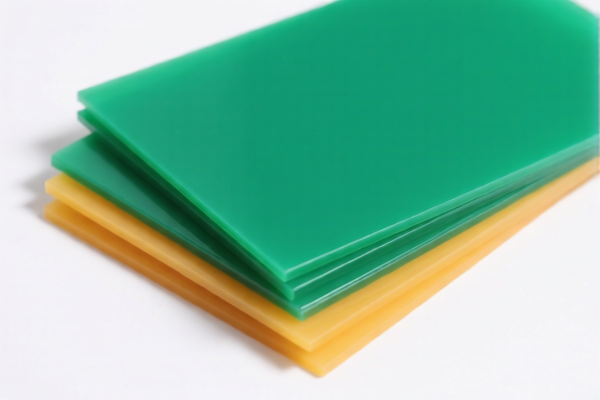
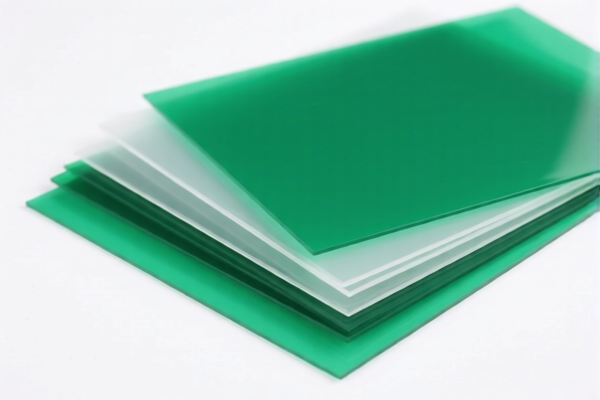
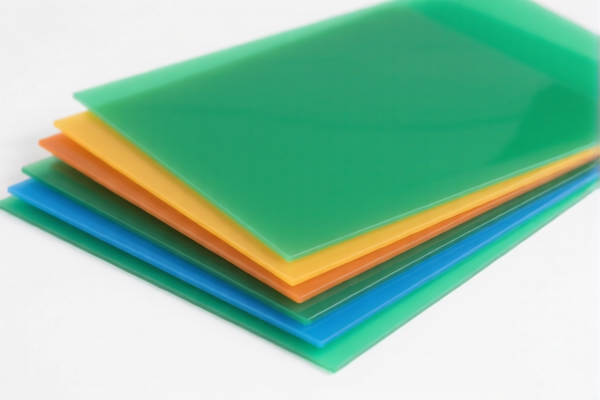
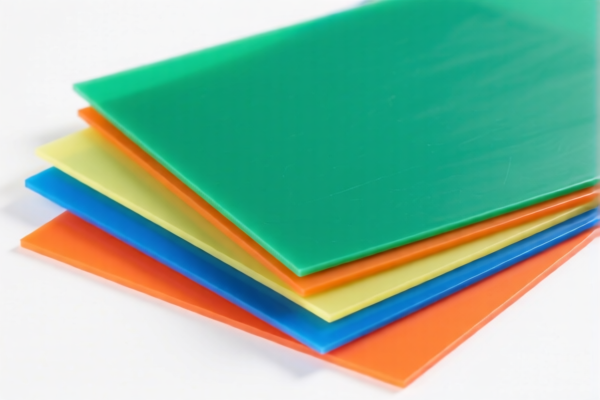
AI Analysis
🧱 Polyamide Plastic Sheet (Non-foamed)
🌐 HS Code Reference & Customs Clearance Guide | 2026 Latest Tariff Analysis | Professional Entry Strategy
📌 I. Product Definition & Classification: What Exactly is "Polyamide"?
Polyamide (PA), commonly known as Nylon, is a versatile synthetic polymer renowned for its high mechanical strength, abrasion resistance, and thermal stability. In international trade, when referred to as "Non-foamed Plastic Sheets," it denotes solid, dense plastic forms without air pockets (unlike expanded polystyrene or foam board).
These products are strictly categorized based on their form (sheet/board/strip) and material composition. Misclassification often leads to severe tariff penalties under current US trade restrictions.
⚠️ Key Classification Criteria:
- Material: Must be confirmed as Polyamide (Nylon). If it is PVC, PET, or PP, the HS code changes completely.
- Form:
- Solid Sheets/Boards: Flat, uniform thickness. → Likely 3920
- Strips/Bands: Long, narrow profiles. → Likely 3926
- Foamed: Contains cellular structure. → Not applicable here (User specified "Non-foamed")
📦 II. HS Code Classification Details (2026 Latest Tariff Authority Comparison)
Below are the exact HS Codes derived from the provided data, mapped to the specific physical form of the Polyamide product.
| HS Code | Product Description | Application Scenario | Tax Detail Breakdown |
|---|---|---|---|
3920.99.10.00 |
Polyamide Plastic Boards, non-cellular, matching material & form | Rigid, flat sheets used for machining, gaskets, or structural parts | Total Tax: 41.0% • Base: 6.0% • Add'l Tariff: 25.0% • Section 122: 10% |
3920.92.00.00 |
Polyamide Non-foam Plastic Sheets, exact material & form match | Thin to medium-thickness films or sheets, strictly Polyamide | Total Tax: 39.2% • Base: 4.2% • Add'l Tariff: 25.0% • Section 122: 10% |
3926.90.60.10 |
Polyamide Plastic Strip Articles, non-foam, plastic goods category | Extruded strips, rods, or narrow profiles for industrial use | Total Tax: 39.2% • Base: 4.2% • Add'l Tariff: 25.0% • Section 122: 10% |
3926.90.60.90 |
Polyamide Band Articles, non-foam, material consistency | Belts, bands, or wider strip forms, no material conflict | Total Tax: 39.2% • Base: 4.2% • Add'l Tariff: 25.0% • Section 122: 10% |
3920.43.50.00 |
Non-foam PVC Sheets, similar form, reference classification only | Warning: This is for PVC, not Polyamide. Included only as a form-reference comparison. | Total Tax: 39.2% • Base: 4.2% • Add'l Tariff: 25.0% • Section 122: 10% |
🔍 Critical Distinction:
- Use3920.xxxxxfor Sheets, Plates, and Films (broad, flat forms).
- Use3926.90.60for Strips, Bands, and Articles (narrow, profiled forms).
- Do not use3920.43.50.00unless the product is actually PVC. Using this for Polyamide is a misdeclaration that will trigger audits.
💰 III. 2026 Latest Tariff Rate Detailed Explanation (Including Surcharges & Policy Add-ons)
✅ Applicable Country: United States (US)
✅ Origin: China (CN) (Implied by "Section 122" and typical 301/122 context)
✅ Effective Time: Current 2026 Trade Policy
🎯 1. 3920.99.10.00 —— Polyamide Plastic Boards (Highest Tax Scenario)
| Item | Content |
|---|---|
| Base Tariff | 6.0% |
| Add'l Tariff (Section 301) | +25.0% |
| Section 122 Tariff | +10.0% |
| Total Effective Rate | 41.0% |
| Tax Calculation | CIF Value × 41.0% |
| De Minimis Exemption | ❌ Not Applicable (High-risk category) |
| Legal Basis Path | HTSUS:3920.99.10.00 → Section 301 Footnote → Section 122 Provision |
📌 Explanation:
- 41.0% is a very high effective duty rate.
- The Section 122 tariff (often related to specific enforcement actions or recent trade provisions) adds an extra 10% on top of the standard 301 tariffs.
- Board forms are often scrutinized more heavily than thin sheets due to potential industrial use.
🎯 2. 3920.92.00.00 —— Polyamide Non-foam Plastic Sheets
| Item | Content |
|---|---|
| Base Tariff | 4.2% |
| Add'l Tariff (Section 301) | +25.0% |
| Section 122 Tariff | +10.0% |
| Total Effective Rate | 39.2% |
| Tax Calculation | CIF Value × 39.2% |
| De Minimis Exemption | ❌ Not Applicable |
| Legal Basis Path | HTSUS:3920.92.00.00 → Section 301 Footnote → Section 122 Provision |
📌 Note:
- Slightly lower than boards due to a lower base rate (4.2% vs 6.0%).
- Applies to thin, flexible, or semi-rigid sheets specifically identified as Polyamide.
🎯 3. 3926.90.60.10 & 3926.90.60.90 —— Strips and Bands
| Item | Content |
|---|---|
| Base Tariff | 4.2% |
| Add'l Tariff (Section 301) | +25.0% |
| Section 122 Tariff | +10.0% |
| Total Effective Rate | 39.2% |
| Tax Calculation | CIF Value × 39.2% |
| De Minimis Exemption | ❌ Not Applicable |
| Legal Basis Path | HTSUS:3926.90.60.xx → Section 301 Footnote → Section 122 Provision |
📌 Note:
- These codes fall under Chapter 39, Heading 3926 (Other articles of plastics).
- Even though it’s plastic, because it’s shaped as a strip/band, it’s not classified as a "sheet" (3920) but as a "manufactured article" (3926).
- The tariff burden is similar to sheets but requires precise physical description.
🛠️ IV. Customs Clearance Practical Advice (Battle-Tested Pitfall Guide)
✅ 1. Required Documentation Checklist (Missing Items = Delay/Confiscation)
| Document | Mandatory? | Explanation |
|---|---|---|
| ✅ Product Specification Sheet | ✔️ | Must explicitly state Material: Polyamide (Nylon PA6/PA66/etc.). |
| ✅ Material Safety Data Sheet (MSDS) | ✔️ | Proves chemical composition; prevents confusion with other plastics. |
| ✅ Physical Samples/Photos | ✔️ | Show cross-section to prove Non-foamed (dense structure). |
| ✅ Commercial Invoice | ✔️ | Must clearly describe: "Polyamide Plastic Sheets, Non-foamed, Brand XYZ, Model ABC". |
| ✅ Bill of Lading / Packing List | ✔️ | Verify weight and dimensions match HS Code assumptions. |
| ✅ Certificate of Origin | ✔️ | If shipping from China, confirms origin for Section 122/301 assessment. |
✅ 2. Declaration Tactics (Key Mnemonics)
🔥 "Form Determines Code, Material Determines Duty, Precision Saves Money!"
| Scenario | Correct Declaration | Wrong Practice | Consequence |
|---|---|---|---|
| Flat, thick sheets | 3920.99.10.00 |
Call it "Plastic Parts" | Vague declaration → Audit |
| Thin, flexible film | 3920.92.00.00 |
Classify as "Boards" | Overpayment or Underpayment Risk |
| Long narrow strips | 3926.90.60.10 |
Call it "Sheets" | Misclassification → Penalty |
| PVC Sheets (mistakenly labeled PA) | 3920.43.50.00 |
Label as "Polyamide" | Fraud Alert → Seizure |
📌 Critical Tip:
- Always specify "Non-cellular" or "Non-foamed" in the description to avoid disputes.
- If the product is colored, mention it, but it doesn’t change the HS code for Polyamide.
- Do not use generic terms like "Plastic Sheet" without specifying Polyamide.
✅ 3. Special Circumstances Handling
| Situation | Handling Advice |
|---|---|
| Hybrid Materials | If it’s a composite (e.g., Nylon + Glass Fiber), ensure the base material is still Polyamide. If glass fiber >50%, HS may change to 3916/3917. |
| OEM Custom Colors | Provide color codes. Customs may request samples for verification if color is unusual. |
| Small Quantity (<$800) | Warning: Due to high tariffs (39-41%), the De Minimis exemption is NOT available for Section 122/301 goods from China. Even small shipments are taxable. |
| Transshipment | Do not reroute via Vietnam/Mexico to avoid Section 122/301. Strict origin rules apply. |
🌍 V. Global Market Comparison (2026 Latest)
| Country/Region | Recommended HS Code | Tariff Rate | Certification | Note |
|---|---|---|---|---|
| 🇺🇸 USA | 3920.99.10.00 / 3920.92.00.00 |
39.2% - 41.0% | No special certs | High duty due to Section 122 & 301 |
| 🇨🇳 China | 3920.99.00 / 3920.92.00 |
~4.2% - 6.0% | N/A | Low import tax |
| 🇪🇺 EU | 3920.49 / 3920.99 |
~6.5% | REACH Compliance | No 301/122 tariffs |
| 🇬🇧 UK | 3920.99 |
~6.5% | UKCA | Post-Brexit rules apply |
| 🇨🇦 Canada | 3920.99 |
~5.0% | N/A | FTA benefits may apply |
📌 Conclusion:
- The USA is the only major market imposing punitive tariffs (up to 41%) on Chinese-origin Polyamide plastic sheets.
- For US market entry, cost calculation must include ~40% duty. Consider pricing strategies or alternative sourcing if margins are thin.
- EU and UK markets are far more favorable (~6.5%), but require REACH chemical registration for Polyamide.
📌 VI. Common Errors & Pitfall Guide (Lessons from Experience)
❌ Error 1: Declaring "Plastic Sheet" without specifying Polyamide.
👉 Consequence: Customs may classify it under generic plastics (higher base rate) or request costly lab tests.
❌ Error 2: Confusing Sheet (3920) with Strip (3926).
👉 Consequence: If you ship wide sheets but declare as "strips," customs will reject it. If you ship strips but declare as "sheets," you may face misdeclaration penalties.
❌ Error 3: Assuming De Minimis ($800 exemption) applies.
👉 Consequence: It does NOT for Section 122/301 goods. Small shipments will still incur ~40% duty.
❌ Error 4: Using PVC Code (3920.43.50.00) for Polyamide.
👉 Consequence: This is a material mismatch. Polyamide and PVC have different densities, melting points, and chemical properties. Customs will reject this as false declaration.
✅ Correct Declaration Example:
"Polyamide (Nylon) Plastic Sheets, Non-foamed, Flat, 2mm Thickness, Raw Material Grade, Not for Specific Use, HS 3920.92.00.00"
🎯 VII. Conclusion: Precise Classification, Cost Control, and Compliance
🎯 Remember the Mantra:
🔹 "Polyamide is Key, Form Defines Code, 40% Duty is Real!"
🔹 "Don't guess the HS, verify the material, avoid the penalty trap!"
📌 Pro Tip:
If your Polyamide sheets are recycled or have additives (e.g., flame retardant), declare these explicitly. It may affect the "Specific Use" classification but not the base HS code for basic sheets.
🚀 Action Plan:
1. Verify Material: Confirm 100% Polyamide via MSDS.
2. Measure Form: Is it a Sheet (3920) or Strip (3926)?
3. Calculate Landed Cost: Add 39.2%-41.0% to your CIF price for US imports.
4. Consult a Broker: For large volumes, request a Binding Ruling from US CBP to lock in the HS code.
✨ Professional Customs Clearance Starts with Accurate Classification!
💼 Every 1% error in HS code can cost thousands in duties and delays!
Customer Reviews
About HS Code Classification
The Harmonized System (HS) is an internationally standardized nomenclature developed by the World Customs Organization (WCO) to classify traded products. Over 200 countries use the HS system as the basis for customs tariffs, trade statistics, and import/export regulations.
Each HS code follows a hierarchical structure:
- Chapter (2 digits) — Broad category of goods (e.g., Chapter 84: Machinery and Mechanical Appliances)
- Heading (4 digits) — More specific grouping within the chapter
- Subheading (6 digits) — Internationally standardized breakdown, used by all WCO member countries
- National subdivisions (8-10 digits) — Country-specific extensions for further classification, such as US HTSUS 10-digit codes
Correct HS code classification is essential for smooth customs clearance, accurate duty payment, and compliance with trade regulations. Misclassification can lead to customs delays, overpayment of duties, or penalties.
When importing from CN to US, the applicable tariff rates may include:
- Most-Favored-Nation (MFN) rate — The standard duty rate applied to WTO members
- General rate — Applied to countries without trade agreements
- Trade remedy duties — Additional tariffs such as Section 301 (anti-dumping), Section 232 (national security), or countervailing duties
The information provided on this page is for reference purposes only. For official classification, please consult with your local customs authority or a licensed customs broker.