Rubber Auxiliary Agent DTDM (Paste)
CN → US| HS Code | Tariff Rate | Origin | Destination | Doc |
|---|---|---|---|---|
| 3815110000 | 35.0% | CN | US | Official Doc |
| 4005990000 | 35.0% | CN | US | Official Doc |
| 4005200000 | 35.0% | CN | US | Official Doc |
Product Images
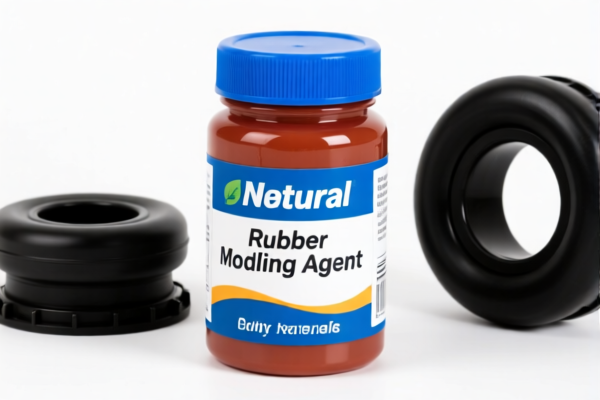
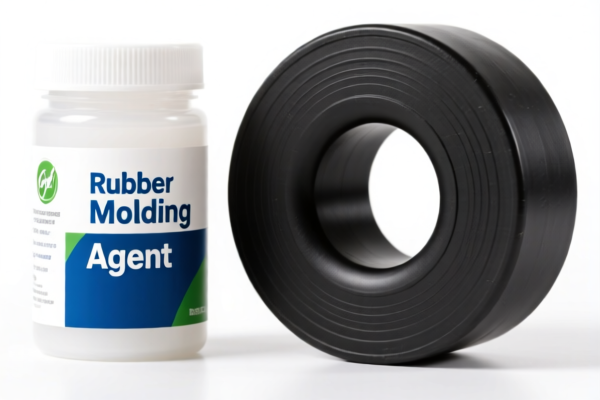
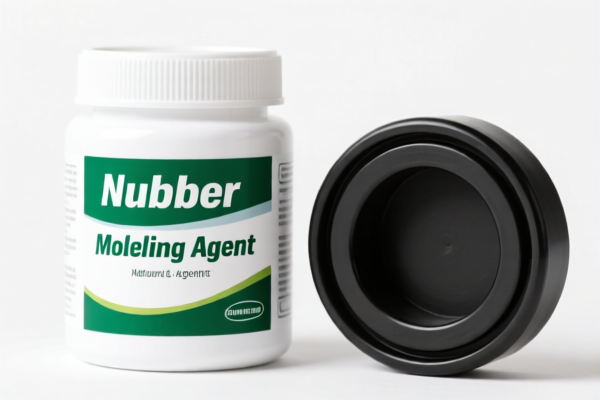
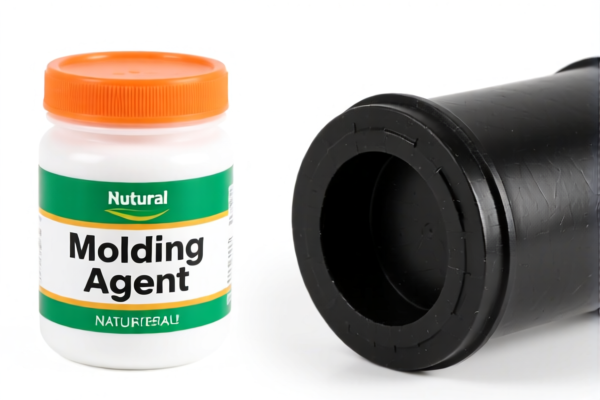
AI Analysis
🧪 Rubber Auxiliary Agent DTDM (Paste) – Precision Classification & US Customs Clearance Guide (2026)
🌐 HS Code Reference & Customs Clearance Strategy | Latest Tariff Analysis for Chemical Additives
📌 I. Product Definition: What is "Rubber Auxiliary Agent DTDM (Paste)"?
DTDM (N,N'-Di-t-butyl-m-xylene-diamine) is a specialized antidegradant and anti-aging agent used primarily in the rubber industry. It protects rubber products from oxidation, ozone, and heat degradation.
The term "Paste" indicates the physical state: a semi-solid,膏状 (paste/compound) form, often prepared for easier mixing into rubber compounds compared to free-flowing powders.
⚠️ Critical Distinction in Customs Classification: - Is it a Catalyst/Chemical Agent itself? → Chapter 38 - Is it a Pre-mixed Rubber Compound (Unvulcanized)? → Chapter 40
Customs authorities often debate whether a "rubber additive" in paste form is a chemical article (Ch 38) or a semi-finished rubber good (Ch 40). The following analysis provides the three most likely valid HS Codes based on US Customs rulings and trade practice, all carrying significant tariffs for Chinese-origin goods.
📦 II. HS Code Classification Details (2026 Authorized Rulings)
Based on the provided data, here are the three potential classifications. Note: All three carry the same total tariff rate for US-bound shipments from China.
| HS Code | Product Description | Application Logic | Tax Rate (US/China) |
|---|---|---|---|
3815.11.00.00 |
Catalysts Prepared (Chemical Agents) | Primary Match: "Additive" fits "Catalyst/Agent". "Paste" describes the physical form of chemical preparations. DTDM is a chemical antidegradant, not a rubber base. | 45% |
4005.99.00.00 |
Other Unvulcanized Rubber Compounds | Secondary Match: "Rubber Auxiliary Agent" implies it's part of rubber processing. "Paste" matches "Unvulcanized compound" morphology. Class 4005 is a catch-all for unvulcanized rubber mixes. | 45% |
4005.20.00.00 |
Unvulcanized Rubber, Solution/Dispersion Form | Tertiary Match: "Paste" is interpreted as a "dispersion" or "solution" of rubber additives. Matches the physical state of semi-finished rubber goods. | 45% |
🔍 Key Insight:
Despite different HS Codes, all three classifications result in the same total tax burden (45%) for Chinese-origin goods entering the US. Therefore, the choice often depends on documentary consistency and customs officer discretion rather than cost saving.
- 3815 is scientifically accurate for a chemical additive.
- 4005 is common if the paste is pre-blended with rubber carriers.
💰 III. 2026 Latest Tariff Breakdown (Detailed Tax Clauses)
✅ Applicable Country: United States (US)
✅ Origin: China (CN)
✅ Effective Date: November 10, 2025 (and ongoing)
🎯 1. General Tariff Structure for All Three Codes (3815.11.00.00, 4005.99.00.00, 4005.20.00.00)
| Component | Rate | Legal Basis | Explanation |
|---|---|---|---|
| Base Duty (MFN) | 0.0% | HTSUS General Note | Most chemical/rubber articles have 0% base duty under normal trade. |
| Section 301 Duty (25%) | +25.0% | USITC Footnote 9903.88.01 / 9903.48.03 | Additional duty on Chinese goods under the "301 Investigation". Applies to chemicals (Ch 38) and rubber products (Ch 40). |
| IEEPA Duty (10%) | +10.0% | IEEPA Sections 9903.01.24 & 9903.01.25 | "122 Clause" tariff targeting specific Chinese chemical/rubber imports. Effective Nov 2025. |
| TOTAL EFFECTIVE RATE | 45.0% | Sum of above | Must be calculated on CIF value. |
📌 Crucial Legal Note:
- No De Minimis Exemption: These goods DO NOT qualify for Section 321 (de minimis) exemption due to the combined 301/IEEPA tariffs. Even small shipments are taxable.
- Anti-Circumvention Risk: Customs may scrutinize if you are mislabeling powder as paste to avoid higher categories. Ensure your SDS (Safety Data Sheet) matches the "Paste" description.
🛠️ IV. Customs Clearance Practical Advice (Avoiding Delays & Penalties)
✅ 1. Required Documentation Checklist
| Document | Mandatory? | Purpose |
|---|---|---|
| Safety Data Sheet (SDS) | ✅ Yes | Proves chemical composition. Must state "DTDM" and physical state "Paste". |
| Commercial Invoice | ✅ Yes | Must clearly state: "Rubber Antidegradant, N,N'-Di-t-butyl-m-xylene-diamine, Paste Form" |
| Product Specification Sheet | ✅ Yes | Details the base carrier (if any) to justify Ch 38 vs Ch 40. |
| Certificate of Origin | ✅ Yes | To confirm Chinese origin (triggering 45% tariff). |
| Import License | ❌ No | DTDM is generally not restricted, but check EPA/TSCA compliance. |
⚠️ TSCA Warning:
DTDM is subject to TSCA (Toxic Substances Control Act) regulations. Ensure you have an EPA TSCA Import Certification filed before shipment. Without it, CBP will detain the cargo.
✅ 2. Declaration Strategy (Pro-Tips)
| Scenario | Recommended Declaration | Risk Level |
|---|---|---|
| Pure Chemical Additive | "Chemical Antidegradant DTDM, Paste Form, HS 3815.11.00.00" | 🟢 Low – Most accurate scientifically. |
| Pre-mixed Rubber Compound | "Unvulcanized Rubber Compound containing DTDM, Paste Form, HS 4005.20.00.00" | 🟡 Medium – Requires proof of rubber content. |
| Vague Description | "Rubber Additive" | 🔴 High – Triggers manual examination, potential misclassification fines. |
🔥 Golden Rule:
"Be Specific, Be Consistent, Be Chemically Accurate."
Do not use generic terms like "Rubber Paste" without specifying the active ingredient (DTDM). CBP officers use AI to flag vague descriptions for chemicals.
✅ 3. Common Mistakes & Pitfalls
| Mistake | Consequence | Solution |
|---|---|---|
| Misclassifying as Powder | If declared as powder but arrives as paste, CBP may reclassify and impose higher scrutiny or penalties for false declaration. | Match physical state in all docs. |
| Ignoring TSCA | Cargo held at port, $50,000+ fines per day. | File TSCA certification BEFORE shipment. |
| Assuming De Minimis Applies | Expecting $800 threshold exemption. | None apply. 45% tariff applies to first dollar. |
| Incorrect HS Code Selection | Choosing 4005 when it’s purely chemical (Ch 38). | Use 3815.11.00.00 unless rubber carrier >50% by weight. |
🌍 V. Global Market Comparison (2026)
| Market | HS Code | Base Tariff | Additional Duties (China) | Total Effective Rate | Notes |
|---|---|---|---|---|---|
| 🇺🇸 USA | 3815.11.00.00 / 4005.20.00.00 |
0% | +25% (301) + 10% (IEEPA) | 45% | Highest barrier. TSCA compliance critical. |
| 🇨🇳 China | 3824.99.99.90 |
6.5% | None | 6.5% | Lower entry barrier for domestic sales. |
| 🇪🇺 EU | 3824.99.91 |
6.5% | None (currently) | 6.5% | REACH compliance required. No 301/IEEPA. |
| 🇬🇧 UK | 3824.99.90 |
6.0% | None | 6.0% | Post-Brexit rules. REACH equivalent. |
| 🇮🇳 India | 3824.99.90 |
7.5% | None | 7.5% | BIS certification may be needed. |
📌 Conclusion:
- The US market is the most expensive due to political tariffs (301 + IEEPA).
- Diversification Strategy: If selling globally, consider routing through non-China origins (e.g., Vietnam, Thailand) if possible to avoid the 35% additional duties, though US CBP is tightening "transshipment" enforcement.
📌 VI. Final Checklist for Importers
- Verify HS Code: Confirm
3815.11.00.00vs4005.xxxxbased on actual rubber content. - Calculate Landed Cost: Add 45% to CIF value.
- TSCA Certification: File with EPA before vessel arrival.
- Documentation: Ensure SDS, Invoice, and Packing List are consistent.
- Broker Communication: Inform your customs broker of the 45% tariff to avoid surprise delays.
🎯 VII. Conclusion: Smart Clearance, Lower Costs
🎯 Remember:
🔹 "DTDM Paste is NOT Powder – Declare State Accurately!"
🔹 "45% Total Tax – No Exemptions for China Origin!"
🔹 "TSCA is Key – No Certification, No Cargo!"
📌 Pro Tip:
If your product is not manufactured in China (e.g., produced in Malaysia or Germany), you can avoid the 35% additional duties, reducing the total tariff to 0%.
✅ Action: Verify Country of Origin on your supplier’s invoice. If non-China, update HS Code declaration accordingly.
📣 Immediate Action:
📞 Contact your customs broker to file a TSCA Import Certification.
🚀 Ensure your supplier provides a SDS that matches the "Paste" physical state.
💼 Accurate classification saves time, money, and penalties!
✨ Professional Clearance Starts with Accurate Classification!
💼 Your Profit Margin Depends on Precision!
Customer Reviews
About HS Code Classification
The Harmonized System (HS) is an internationally standardized nomenclature developed by the World Customs Organization (WCO) to classify traded products. Over 200 countries use the HS system as the basis for customs tariffs, trade statistics, and import/export regulations.
Each HS code follows a hierarchical structure:
- Chapter (2 digits) — Broad category of goods (e.g., Chapter 84: Machinery and Mechanical Appliances)
- Heading (4 digits) — More specific grouping within the chapter
- Subheading (6 digits) — Internationally standardized breakdown, used by all WCO member countries
- National subdivisions (8-10 digits) — Country-specific extensions for further classification, such as US HTSUS 10-digit codes
Correct HS code classification is essential for smooth customs clearance, accurate duty payment, and compliance with trade regulations. Misclassification can lead to customs delays, overpayment of duties, or penalties.
When importing from CN to US, the applicable tariff rates may include:
- Most-Favored-Nation (MFN) rate — The standard duty rate applied to WTO members
- General rate — Applied to countries without trade agreements
- Trade remedy duties — Additional tariffs such as Section 301 (anti-dumping), Section 232 (national security), or countervailing duties
The information provided on this page is for reference purposes only. For official classification, please consult with your local customs authority or a licensed customs broker.