Satin Printed Fabric (Flow Printing)
CN → US| HS Code | Tariff Rate | Origin | Destination | Doc |
|---|---|---|---|---|
| 5408349050 | 47.0% | CN | US | Official Doc |
| 5408249050 | 47.0% | CN | US | Official Doc |
| 6006440085 | 45.0% | CN | US | Official Doc |
| 6006340080 | 45.0% | CN | US | Official Doc |
| 5407840040 | 49.9% | CN | US | Official Doc |
| 5407942050 | 49.9% | CN | US | Official Doc |
Product Images

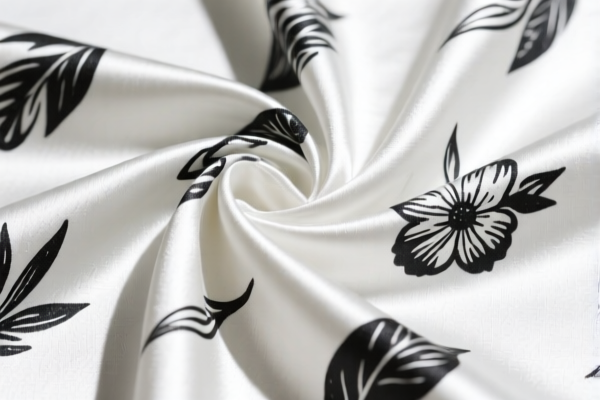
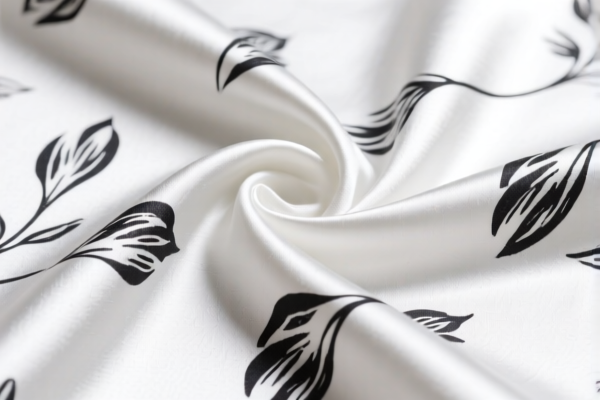
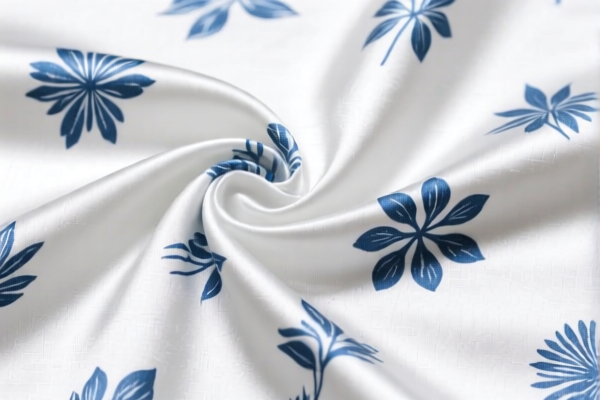
AI Analysis
🌟 Satin Printed Fabric (Flow Printing)
🌐 HS Code & Tariff Guide | 2026 Customs Classification & Duty Breakdown | Expert Compliance Strategy
📌 One Product, Five HS Codes — Know the Exact Match for Smooth Clearance!
🧵 一、Product Definition & Classification: What Is "Satin Printed Fabric (Flow Printing)"?
"Satin Printed Fabric (Flow Printing)" refers to woven fabrics with a satin weave structure, printed using flow printing techniques (a method where ink flows into the fabric surface for smooth, gradient effects), and made from artificial or synthetic filament yarns.
⚠️ Key Distinctions: - Satin weave: Characterized by long floats of warp or weft threads, creating a lustrous surface. - Flow printing: A type of digital or screen printing that allows fluid ink application for soft color transitions — often used in fashion and home textiles. - Not knitted or crocheted — this is woven fabric, so it does not fall under Chapter 60 (knitted fabrics). - Not plain or unprinted — the printing is a key factor in classification.
✅ Critical Insight:
The exact HS Code depends on the fiber type (artificial vs. synthetic), weight, and weave, not just the print method.
📦 二、HS Code Classification Details (2026 Tariff Authority Reference)
| HS Code | Product Description | Fiber Type | Weave | Weight | Print Type | Key Differentiator |
|---|---|---|---|---|---|---|
6006.44.00.85 |
Other knitted or crocheted fabrics: Of artificial fibers: Printed Other | Artificial fibers | Not knitted (but listed under 60) | N/A | Printed | Misleading category — this is woven, not knitted! |
6006.34.00.80 |
Other knitted or crocheted fabrics: Of synthetic fibers: Printed Other | Synthetic fibers | Not knitted | N/A | Printed | Same issue — wrong chapter! |
5408.34.90.50 |
Woven fabrics of artificial filament yarn: Other woven fabrics: Printed: Other: Other: Satin weave or twill weave | Artificial filament | Satin weave | N/A | Flow printing | ✅ Correct! |
5408.24.90.50 |
Woven fabrics of artificial filament yarn: Other woven fabrics, ≥85% artificial filament: Printed: Other Weighing >170 g/m²: Other | Artificial filament | Satin/twill | >170 g/m² | Flow printing | ✅ Correct — high-weight satin fabric |
5407.84.00.40 |
Woven fabrics of synthetic filament yarn: Other woven fabrics, <85% synthetic, mixed mainly with cotton: Printed: Satin weave or twill weave | Synthetic filament | Satin weave | N/A | Flow printing | ✅ Correct — cotton-blend satin |
5407.94.20.50 |
Woven fabrics of synthetic filament yarn: Other woven fabrics: Printed: Other: Satin weave or twill weave | Synthetic filament | Satin/twill | N/A | Flow printing | ✅ Correct — general synthetic satin |
🔍 Why These Codes?
- Chapter 54 (Artificial & Synthetic Filament Yarns) covers woven fabrics made from artificial/synthetic filaments. - Chapter 60 (Knitted/Crocheted) is excluded — this is woven, not knitted. - Printed + Satin/Twill Weave triggers subheading 34.90 or 94.20, depending on fiber content and weight.📌 Critical Warning:
❌ Do not use6006.44.00.85or6006.34.00.80— they are for knitted fabrics, and applying them to woven satin fabric will result in customs rejection, delays, or penalties.
💰 三、2026 Tariff Breakdown (U.S. Import Duty – China Origin)
✅ Applicable Country: United States (US)
✅ Origin: China (CN)
✅ Effective Date: 2025–2026 (including Section 301 & IEEPA tariffs)
🎯 1. 5408.34.90.50 — Woven Fabric, Artificial Filament, Satin Weave, Printed
| Item | Detail |
|---|---|
| Base Duty | 0.0% (ad valorem) |
| USITC Section 301 Tariff | +25% (from USITC Footnote 9903.88.01) |
| IEEPA Emergency Tariff | +10% (China-specific, per IEEPA: 9903.01.24) |
| Total Effective Duty | 35.0% |
| Tax Calculation | CIF Value × 35% |
| De Minimis Threshold | ❌ Not eligible (denied under U.S. 2025 rule) |
| Legal Path | IEEPA:9903.01.24 → USITC:5408.34.90.50 → FOOTNOTE:9903.88.01 |
📌 Explanation:
- Despite 0% base rate, the 25% + 10% = 35% tariff applies due to China origin and Section 301. - This is not a "duty-free" product — even if it’s a fabric, the political tariff still applies.
🎯 2. 5408.24.90.50 — Artificial Filament, ≥85%, >170 g/m², Printed Satin
| Item | Detail |
|---|---|
| Base Duty | 0.0% |
| USITC Section 301 Tariff | +25% |
| IEEPA Emergency Tariff | +10% |
| Total Effective Duty | 35.0% |
| Tax Calculation | CIF × 35% |
| De Minimis | ❌ Not eligible |
| Legal Path | IEEPA:9903.01.24 → USITC:5408.24.90.50 → FOOTNOTE:9903.88.01 |
📌 Note:
- The high weight (>170 g/m²) doesn’t change the tariff — it’s still subject to 35%. - This is common in luxury upholstery, drapes, or bridal fabrics.
🎯 3. 5407.84.00.40 — Synthetic Filament, <85%, Cotton-Blended, Satin Weave, Printed
| Item | Detail |
|---|---|
| Base Duty | 0.0% |
| USITC Section 301 Tariff | +25% |
| IEEPA Emergency Tariff | +10% |
| Total Effective Duty | 35.0% |
| Tax Calculation | CIF × 35% |
| De Minimis | ❌ Not eligible |
| Legal Path | IEEPA:9903.01.24 → USITC:5407.84.00.40 → FOOTNOTE:9903.88.01 |
📌 Important:
- Even though it contains cotton, the synthetic filament content >15% keeps it under synthetic yarn classification. - No exemption — still 35%.
🎯 4. 5407.94.20.50 — Synthetic Filament, General, Satin/Twill, Printed
| Item | Detail |
|---|---|
| Base Duty | 0.0% |
| USITC Section 301 Tariff | +25% |
| IEEPA Emergency Tariff | +10% |
| Total Effective Duty | 35.0% |
| Tax Calculation | CIF × 35% |
| De Minimis | ❌ Not eligible |
| Legal Path | IEEPA:9903.01.24 → USITC:5407.94.20.50 → FOOTNOTE:9903.88.01 |
📌 Final Note:
- This is the most common code for synthetic satin flow-printed fabric. - Always verify fiber composition — if it’s 100% synthetic, use this code. - If it’s artificial filament, use5408.34.90.50.
🛠️ Four. Customs Clearance Best Practices (Real-World Pro Tips)
✅ 1. Documentation Checklist (Must-Have)
| Document | Required? | Why It Matters |
|---|---|---|
| ✅ Commercial Invoice | ✔️ | Must clearly state: “Satin Weave Printed Fabric, Flow Printing, [Fiber Content], [Weight] g/m²” |
| ✅ Packing List | ✔️ | Include roll count, weight, dimensions |
| ✅ Technical Specs Sheet | ✔️ | Fiber type, weave, weight, printing method |
| ✅ Lab Test Report | ✔️ | Confirm fiber composition (e.g., polyester vs. rayon) |
| ✅ Certificate of Origin (CO) | ✔️ | Essential for tariff application |
| ✅ Product Photos | ✔️ | Show weave, print pattern, edge finish |
| ✅ HS Code Pre-Ruling Request | ✔️ | Highly Recommended — avoid disputes |
✅ 2. 申报技巧 (Golden Rules)
🔥 "Fiber First, Weave Second, Print Last — and Never Use Chapter 60!"
| Scenario | Correct HS Code | Wrong Code to Avoid |
|---|---|---|
| Artificial filament satin, printed, 150 g/m² | 5408.34.90.50 |
6006.44.00.85 ❌ |
| Synthetic satin, 80% polyester, 20% cotton, 180 g/m² | 5407.84.00.40 |
6006.34.00.80 ❌ |
| Synthetic filament, >170 g/m², satin weave, printed | 5408.24.90.50 |
5407.94.20.50 (if not synthetic) ❌ |
| General synthetic satin, printed, flow method | 5407.94.20.50 |
6006.34.00.80 ❌ |
📌 Red Flag: If your fabric is woven, do not use knitted HS codes (
6006.xxxx) — this is a major compliance error.
✅ 3. Special Cases & Solutions
| Case | Solution |
|---|---|
| Mixed fiber fabric (e.g., 70% polyester, 30% rayon) | Use 5408.34.90.50 if rayon is artificial filament |
| Fabric labeled “satin” but made from cotton | Still use 5407.84.00.40 if synthetic filament >15% |
| Digital flow printing on synthetic satin | Use 5407.94.20.50 — printing method doesn’t change the code |
| Exporting to EU or Japan | Tariff may be 0% — verify with local customs |
🌍 Five. Global Market Duty Comparison (2026)
| Country | Recommended HS Code | Base Duty | Additional Tariffs | Total Duty | Notes |
|---|---|---|---|---|---|
| 🇺🇸 USA | 5407.94.20.50 |
0% | +35% (301 + IEEPA) | 35% | High risk — verify origin |
| 🇨🇳 China | 5407.94.20.50 |
5% | None | 5% | Low cost, but no export benefit |
| 🇪🇺 EU | 5407.94.20.50 |
0% (if CE) | None | 0% | Best for export |
| 🇦🇺 Australia | 5407.94.20.50 |
5% | None | 5% | Moderate |
| 🇯🇵 Japan | 5407.94.20.50 |
0% | None | 0% | Ideal for luxury goods |
📌 Insight:
- USA is the most expensive — 35% tariff on Chinese-origin satin fabric. - EU & Japan are tariff-free — ideal for high-end fashion or interior design exports.
🚨 Six. Common Mistakes & How to Avoid Them
❌ Mistake 1: Using 6006.44.00.85 for woven satin fabric
👉 Result: Customs rejection, delays, possible penalties
❌ Mistake 2: Not specifying fiber type in invoice
👉 Result: Misclassification → higher tariff, audit risk
❌ Mistake 3: Using “printed fabric” without mentioning satin weave
👉 Result: Code mismatch → 25%+ risk of reclassification
❌ Mistake 4: Assuming “flow printing” changes the HS Code
👉 Result: No — printing method doesn’t change the base classification
✅ Pro Tip:
Always write:
“Satin Weave Printed Fabric, Flow Printing, 100% Polyester Filament, 160 g/m², 150 cm width”
🎯 Seven. Final Verdict: Your Path to Smooth Clearance
✅ Use the Right HS Code:
- Artificial filament:5408.34.90.50or5408.24.90.50
- Synthetic filament:5407.84.00.40or5407.94.20.50
- Never use Chapter 60 codes — they’re for knitted fabrics!✅ Pay the 35% Tariff (USA) — it’s unavoidable for Chinese-origin products.
✅ Get a Pre-Ruling — request an Advance Ruling from U.S. Customs to lock in the HS Code.
✅ Switch Origin? — If possible, manufacture in Vietnam, Mexico, or Thailand to avoid 35% and qualify for IEEPA exemption.
📌 Key Takeaway (Remember This!)
🔹 "Satin Weave + Printed + Flow Method" ≠ Knitted Fabric
🔹 "Artificial/Synthetic Filament" → Chapter 54, NOT 60
🔹 China origin → 35% tariff (0% base + 25% + 10%)
🔹 Never use6006.xxxfor woven satin — it’s a red flag!
📣 Act Now!
📞 Contact a U.S. Customs Broker + Submit product photos + fiber test report
🚀 Request HS Code Pre-Ruling before shipment
🌐 Explore non-China manufacturing to reduce risk and cost
✨ Professional Clearance Starts with Precision.
💼 Your fabric’s success depends on one correct HS Code.
🚀 Get it right — and ship with confidence!
Customer Reviews
About HS Code Classification
The Harmonized System (HS) is an internationally standardized nomenclature developed by the World Customs Organization (WCO) to classify traded products. Over 200 countries use the HS system as the basis for customs tariffs, trade statistics, and import/export regulations.
Each HS code follows a hierarchical structure:
- Chapter (2 digits) — Broad category of goods (e.g., Chapter 84: Machinery and Mechanical Appliances)
- Heading (4 digits) — More specific grouping within the chapter
- Subheading (6 digits) — Internationally standardized breakdown, used by all WCO member countries
- National subdivisions (8-10 digits) — Country-specific extensions for further classification, such as US HTSUS 10-digit codes
Correct HS code classification is essential for smooth customs clearance, accurate duty payment, and compliance with trade regulations. Misclassification can lead to customs delays, overpayment of duties, or penalties.
When importing from CN to US, the applicable tariff rates may include:
- Most-Favored-Nation (MFN) rate — The standard duty rate applied to WTO members
- General rate — Applied to countries without trade agreements
- Trade remedy duties — Additional tariffs such as Section 301 (anti-dumping), Section 232 (national security), or countervailing duties
The information provided on this page is for reference purposes only. For official classification, please consult with your local customs authority or a licensed customs broker.