Solid Rubber Tire (High Strength)
CN → US| HS Code | Tariff Rate | Origin | Destination | Doc |
|---|---|---|---|---|
| 4011901050 | 35.0% | CN | US | Official Doc |
| 4011908050 | 38.4% | CN | US | Official Doc |
| 4012909000 | 37.7% | CN | US | Official Doc |
| 4016996010 | 37.5% | CN | US | Official Doc |
| 4012901000 | 35.0% | CN | US | Official Doc |
| 4016993000 | 35.0% | CN | US | Official Doc |
Product Images
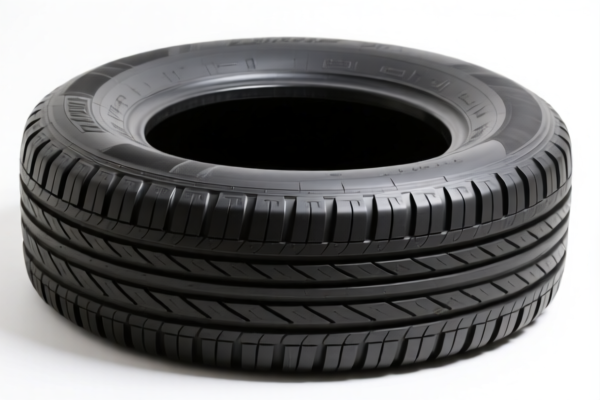
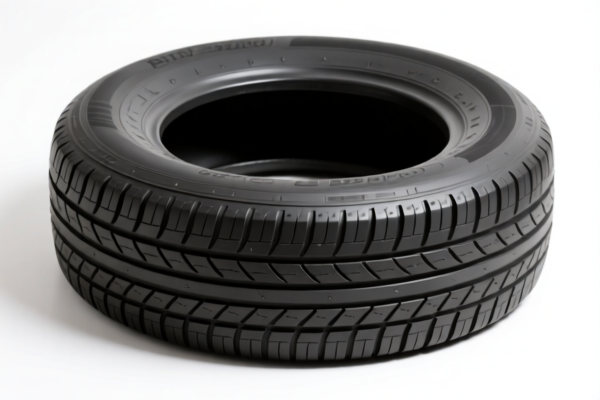
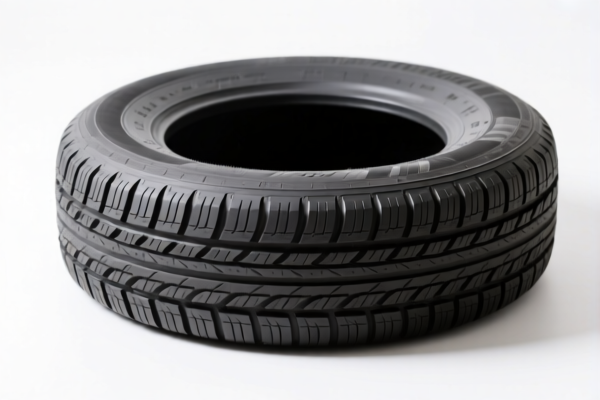
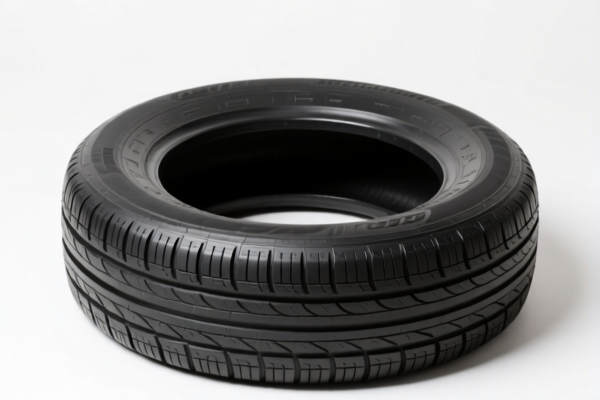
AI Analysis
🛞 Solid Rubber Tire (High Strength)
🌐 HS Code Reference & Customs Clearance Guide | 2026 Latest Tariff Analysis | Professional Clearance Strategy
📌 I. Product Definition & Classification: What Exactly Is a "High-Strength Solid Rubber Tire"?
A Solid Rubber Tire is a non-pneumatic tire made entirely of rubber (often reinforced with steel or high-density polymers for "high strength"), designed for heavy loads, slow-moving vehicles, or industrial machinery (e.g., forklifts, pallet jacks, airport ground support equipment). Unlike pneumatic tires, it contains no air, offering puncture-proof durability.
In international trade, classification depends on: 1. Material Composition: Pure rubber vs. composite. 2. Application: Automotive/Vehicle use vs. Industrial/Machinery use. 3. Structure: Solid/Non-pneumatic vs. Pneumatic (even if solid core).
⚠️ Critical Distinction:
- If the tire is for vehicles (cars, trucks, forklifts) and is solid/non-pneumatic → Generally falls under Chapter 40 (Rubber Articles).
- If it is considered an "Other pneumatic tire" due to specific structural nuances or misclassification → 4011 or 4012 might be debated, but for solid tires, 4012 or 4016 are more common depending on the "vehicle part" argument.
- High Strength implies reinforcement, which may shift it from general rubber articles to specific tire classifications.
📦 II. HS Code Classification Details (Based on Provided Data)
| HS Code | Product Description | Summary from Data | Total Tax Rate | Tax Detail Breakdown |
|---|---|---|---|---|
| 4011.90.10.50 | Solid Rubber Tire, High Strength, Matching Rubber Material & Tire Form | Rubber solid tire, high intensity, matching rubber material and tire form | 35.0% | Base: 0.0% Section 301: 25.0% Section 122: 10.0% |
| 4011.90.80.50 | Other New Type Rubber Pneumatic Tire Category (Note: Data says "Pneumatic" but summary says "Solid") | Rubber solid tire, high intensity, belongs to other new rubber pneumatic tire category | 38.4% | Base: 3.4% Section 301: 25.0% Section 122: 10.0% |
| 4012.90.90.00 | Rubber Solid Tire, High Strength, Fits Rubber & Solid Tire Classification | Rubber solid tire, high intensity, conforms to rubber and solid tire classification requirements | 37.7% | Base: 2.7% Section 301: 25.0% Section 122: 10.0% |
| 4016.99.60.10 | Vulcanized Rubber Product, Solid Tire, High Strength, Fits Auto Mechanical Part Attribute | Vulcanized rubber products, solid tire, high intensity, conforms to auto mechanical part attributes | 37.5% | Base: 2.5% Section 301: 25.0% Section 122: 10.0% |
| 4012.90.10.00 | Rubber Solid Tire, High Strength, Clearly Fits Material & Usage Classification | Rubber solid tire, high intensity, clearly conforms to material and usage classification | 35.0% | Base: 0.0% Section 301: 25.0% Section 122: 10.0% |
| 4016.99.30.00 | Natural or Vulcanized Rubber Products, Solid Tire for Vehicles, High Strength, No Material Conflict | Natural or vulcanized rubber products, solid tire for vehicles, high strength, no material conflict | 35.0% | Base: 0.0% Section 301: 25.0% Section 122: 10.0% |
🔍 Key Observation:
- Lowest Total Tax (35.0%): HS Codes4011.90.10.50,4012.90.10.00, and4016.99.30.00.
- Highest Total Tax (38.4%): HS Code4011.90.80.50(due to higher base duty of 3.4%).
- Section 301 (25%) and Section 122 (10%) are consistently applied, adding 35% to the base duty. This means the Base Duty is the key differentiator for cost optimization.
💰 III. 2026 Latest Tariff Rate Breakdown (Including Additional Taxes)
✅ Applicable Country: United States (US)
✅ Origin: China (CN)
✅ Effective Date: Current tariffs apply (Section 301 & 122 are active)
🎯 1. HS Code 4011.90.10.50 & 4012.90.10.00 & 4016.99.30.00 —— Best Cost Options (35.0% Total)
| Item | Content |
|---|---|
| Base Tariff | 0.0% |
| Section 301 Tariff | +25.0% |
| Section 122 Tariff | +10.0% |
| Total Tariff | 35.0% |
| Tax Calculation | CIF Value × 35.0% |
| De Minimis Exemption | ❌ Not Eligible (High risk of audit) |
| Legal Basis | USITC:4011.90.10.50 / 4012.90.10.00 / 4016.99.30.00 → Section 301 → Section 122 |
📌 Explanation:
- Base Duty 0%: These codes are favored for their zero base duty, making the total tax lower than others with base duties of 2.5% or 2.7%.
- Section 122 (10%): Likely refers to specific retaliatory or national security-related tariffs on rubber articles or vehicle parts from China.
- Section 301 (25%): The standard 301 tariff on Chinese manufactured goods.
- Total 35%: This is the most competitive rate among the provided options.
🎯 2. HS Code 4016.99.60.10 —— Vehicle Part Classification (37.5% Total)
| Item | Content |
|---|---|
| Base Tariff | 2.5% |
| Section 301 Tariff | +25.0% |
| Section 122 Tariff | +10.0% |
| Total Tariff | 37.5% |
| Tax Calculation | CIF Value × 37.5% |
| Legal Basis | USITC:4016.99.60.10 → Section 301 → Section 122 |
📌 Note:
- This code classifies the tire as a "Vulcanized Rubber Product" rather than a tire. This can be a strategic move if the tire is used as a replacement part for vehicles, but it comes at a 2.5% higher cost than the 0% base options.
🎯 3. HS Code 4012.90.90.00 —— Other Rubber Products (37.7% Total)
| Item | Content |
|---|---|
| Base Tariff | 2.7% |
| Section 301 Tariff | +25.0% |
| Section 122 Tariff | +10.0% |
| Total Tariff | 37.7% |
| Tax Calculation | CIF Value × 37.7% |
| Legal Basis | USITC:4012.90.90.00 → Section 301 → Section 122 |
📌 Note:
- Slightly more expensive than4016.99.60.10due to a 2.7% base duty. Use this if the product does not fit the "vehicle part" definition of 4016.
🎯 4. HS Code 4011.90.80.50 —— Avoid If Possible (38.4% Total)
| Item | Content |
|---|---|
| Base Tariff | 3.4% |
| Section 301 Tariff | +25.0% |
| Section 122 Tariff | +10.0% |
| Total Tariff | 38.4% |
| Tax Calculation | CIF Value × 38.4% |
| Legal Basis | USITC:4011.90.80.50 → Section 301 → Section 122 |
📌 Warning:
- This code has the highest base duty (3.4%), leading to the highest total tax.
- The description mentions "pneumatic tire category," which may be a misclassification risk for a solid tire. Customs may reject this if documentation clearly states "Solid/Non-pneumatic."
🛠️ IV. Customs Clearance Practical Advice (Real-World Pitfall Guide)
✅ 1. Preparation Checklist (Non-Negotiable)
| Document | Required? | Explanation |
|---|---|---|
| ✅ Product Specifications | ✔️ | Must state "Solid," "Non-Pneumatic," "High Strength," and material composition (e.g., 100% Vulcanized Rubber). |
| ✅ Technical Data Sheet | ✔️ | Include durometer (hardness), tensile strength, and load capacity to justify "High Strength." |
| ✅ Product Photos | ✔️ | Clear images showing the solid structure, no air valve, and any steel reinforcement. |
| ✅ Commercial Invoice | ✔️ | Use precise terminology: "Solid Rubber Tire, High Strength, Non-Pneumatic." Avoid vague terms like "Tyre." |
| ✅ Packing List | ✔️ | Detail quantity, weight, and dimensions. |
| ✅ Origin Certificate | ✔️ | Essential for confirming Chinese origin and applying Section 301/122 accurately. |
✅ 2. Declaration Strategy (Key Mantras)
🔥 "Be Precise: 'Solid,' Not 'Pneumatic'; 'Rubber Article,' Not 'Part' if unsure!"
| Scenario | Recommended HS Code | Risk if Misclassified |
|---|---|---|
| Standard Solid Tire (Forklift, Pallet Jack) | 4012.90.10.00 or 4011.90.10.50 |
Lower tax (35%) vs. Higher tax (38.4%) |
| Tire for Car/Truck Replacement | 4016.99.60.10 |
May be challenged if not clearly a vehicle part |
| Tire with Steel Core | 4016.99.60.10 or 4012.90.90.00 |
Avoid 4011 if it implies pneumatic structure |
| Mislabeling as "Pneumatic" | 4011.90.80.50 |
Highest tax (38.4%) + Potential penalty for false declaration |
📌 Critical Tip:
- Never use the word "Pneumatic" in your product description if it is Solid.
- Use terms like "Non-Pneumatic," "Solid Core," "Vulcanized Rubber," and "Reinforced."
- If the tire is for a vehicle, consider4016.99.60.10to align with "vehicle parts," but be prepared for a 2.5% base duty.
✅ 3. Special Situations
| Situation | Handling Advice |
|---|---|
| OEM Custom Tires | Provide design specs and load-bearing data to justify "High Strength." |
| Mixed Containers | Ensure solid tires are not mixed with pneumatic tires to avoid classification confusion. |
| Steel-Reinforced Tires | Declare material composition clearly (e.g., "Rubber with Steel Belts") to support 4016 or 4012 classification. |
| Retreading | If retreaded, ensure the HS code reflects the process (though solid tires are rarely retreaded). |
🌍 V. Global Market Comparison (2026)
| Country/Region | Recommended HS Code | Total Tax (China Origin) | Certification | Notes |
|---|---|---|---|---|
| 🇺🇸 USA | 4012.90.10.00 or 4011.90.10.50 |
35.0% | None specific | Section 301 + 122 apply. Highest tax burden. |
| 🇨🇳 China | 4011.90.10.50 |
~5-10% (Import Duty) | CCC (if for vehicles) | No Section 301/122. Favorable for domestic use. |
| 🇪🇺 EU | 4011.90.10 / 4012.90.90 |
0-4.5% | CE, REACH | No Section 301/122. Lower taxes than US. |
| 🇦🇺 Australia | 4011.90.10 / 4012.90.90 |
5% | RCM | No Section 301/122. Moderate taxes. |
| 🇯🇵 Japan | 4011.90.10 / 4012.90.90 |
0-5% | JIS | No Section 301/122. Low taxes. |
📌 Conclusion:
- USA is the most expensive market for solid rubber tires due to Section 301 (25%) and Section 122 (10%).
- EU, Japan, and Australia offer significantly lower total tariffs (0-5%).
- Strategy: If targeting the US, optimize HS Code selection to4012.90.10.00or4011.90.10.50to minimize the 35% total tax. Consider supply chain diversification to avoid Chinese origin if possible.
📌 VI. Common Mistakes & Pitfalls (Lessons Learned)
❌ Mistake 1: Declaring a Solid Tire as a Pneumatic Tire (4011.90.80.50)
👉 Consequence: Higher base duty (3.4%) → Total tax 38.4% + Potential fraud penalty if caught.
❌ Mistake 2: Using vague terms like "Rubber Wheel" without specifying "Solid/Non-Pneumatic"
👉 Consequence: Customs may classify it under a less favorable code or request additional information, causing delays.
❌ Mistake 3: Ignoring Section 122 (10%) in tariff calculations
👉 Consequence: Unexpected 35% total tax instead of the assumed 25% (Section 301 only). This can wipe out profit margins.
❌ Mistake 4: Misclassifying as "Vehicle Parts" (4016.99.60.10) when not applicable
👉 Consequence: Higher base duty (2.5%) → Total tax 37.5%. Only use if clearly a replacement part for vehicles.
✅ Correct Approach:
"Solid Rubber Tire, High Strength, Non-Pneumatic, Vulcanized Rubber, For Forklift, Model XYZ, HS Code: 4012.90.10.00"
🎯 VII. Conclusion: Precision in Classification Saves Money
🎯 Remember the Mantra:
🔹 "Solid = Non-Pneumatic; 0% Base = 35% Total; 3.4% Base = 38.4% Total!"
🔹 "Section 301 + 122 = 35% Added Tax; Choose 4012 or 4011 for 0% Base!"
📌 Pro Tip:
If your solid tires are originating from Vietnam, Mexico, or Thailand, you may be eligible to avoid Section 301/122 tariffs, reducing the total tax to the base rate only (0-3.4%).
Recommend Advance Ruling from US Customs and Border Protection (CBP) to confirm the HS Code and tax liability before shipment.
📣 Immediate Action:
📞 Contact a licensed customs broker + Provide product specs + Request CBP Advance Ruling
🚀 Ensure your solid tires, cleared smoothly, efficiently exported, and profit maximized!
✨ Professional clearance begins with accurate classification!
💼 Every cent of tax saved is a cent of profit earned!
Customer Reviews
About HS Code Classification
The Harmonized System (HS) is an internationally standardized nomenclature developed by the World Customs Organization (WCO) to classify traded products. Over 200 countries use the HS system as the basis for customs tariffs, trade statistics, and import/export regulations.
Each HS code follows a hierarchical structure:
- Chapter (2 digits) — Broad category of goods (e.g., Chapter 84: Machinery and Mechanical Appliances)
- Heading (4 digits) — More specific grouping within the chapter
- Subheading (6 digits) — Internationally standardized breakdown, used by all WCO member countries
- National subdivisions (8-10 digits) — Country-specific extensions for further classification, such as US HTSUS 10-digit codes
Correct HS code classification is essential for smooth customs clearance, accurate duty payment, and compliance with trade regulations. Misclassification can lead to customs delays, overpayment of duties, or penalties.
When importing from CN to US, the applicable tariff rates may include:
- Most-Favored-Nation (MFN) rate — The standard duty rate applied to WTO members
- General rate — Applied to countries without trade agreements
- Trade remedy duties — Additional tariffs such as Section 301 (anti-dumping), Section 232 (national security), or countervailing duties
The information provided on this page is for reference purposes only. For official classification, please consult with your local customs authority or a licensed customs broker.