Tire (HS Code 4011201035)
CN → US| HS Code | Tariff Rate | Origin | Destination | Doc |
|---|---|---|---|---|
| 4011801010 | 35.0% | CN | US | Official Doc |
| 4011201035 | 39.0% | CN | US | Official Doc |
| 4011201015 | 39.0% | CN | US | Official Doc |
Product Images
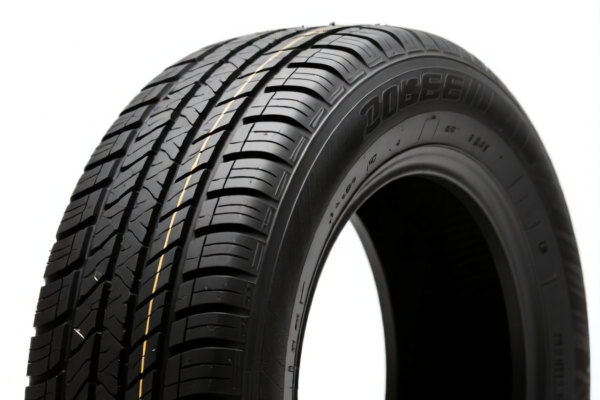
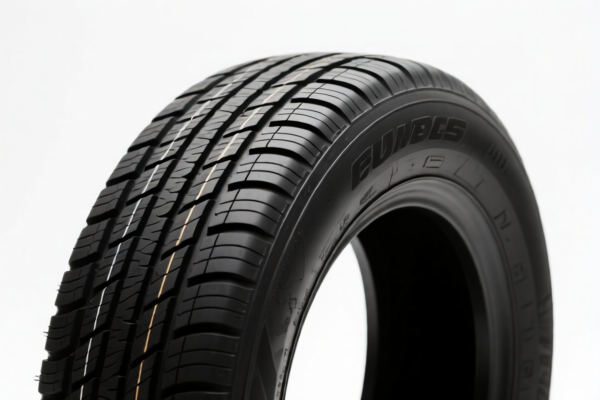
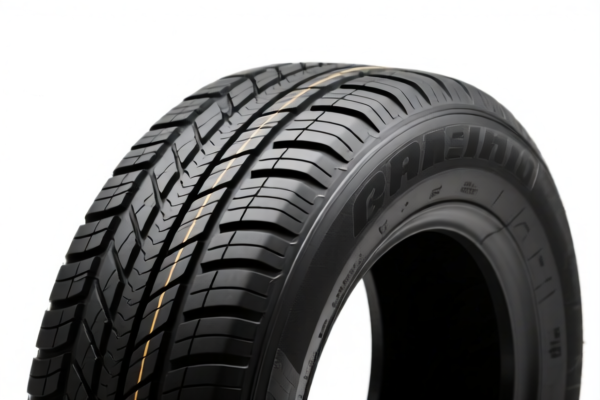
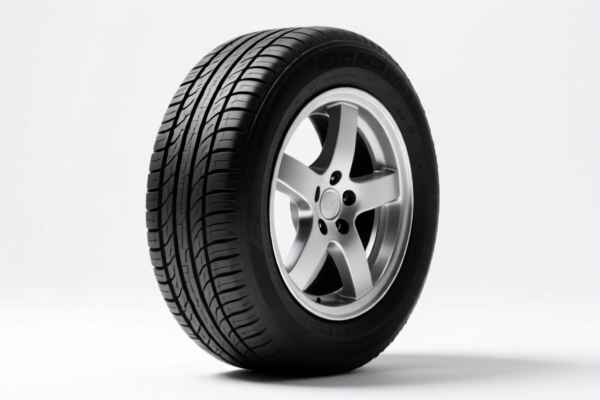
AI Analysis
🛞 Tires (HS Code 4011.20.10.35)
🌐 HS Code Reference & Customs Clearance Guide | 2026 Latest Tariff Analysis | Professional Clearance Strategy
📌 I. Product Definition & Classification: Do You Really Understand "Tires"?
Tires are critical rubber components for vehicles, designed to provide traction, support weight, and absorb shock. In international trade, they are strictly categorized by shape (pneumatic vs. solid) and usage (road, off-road, industrial).
Pneumatic Tires (充气轮胎): Contain an inner chamber for air, providing cushioning. These are further divided by application: - Motor Vehicle Tires: For cars, buses, trucks. - Bicycle/Motorcycle Tires: For two-wheeled vehicles.
⚠️ Key Distinction Point:
- If it is a solid rubber tire (no air) → It falls under different subheadings (e.g., 4011.80).
- If it is a pneumatic tire for road use → It falls under 4011.20.
- The specific code 4011.20.10.35 is reserved for Pneumatic Tires for Road Use (typically passenger cars or similar light vehicles).
📦 II. HS Code Classification Details (2026 Latest Tariff Authority Cross-Reference)
Based on the provided data, here is the precise breakdown for Tire classifications:
| HS Code | Product Description | Application/Scenario | Tax Rate (Total) |
|---|---|---|---|
4011.20.10.35 |
Pneumatic tires, of rubber, for road use | Passenger cars, SUVs, light trucks; designed for paved roads. | 39.0% |
4011.20.10.15 |
Pneumatic tires, of rubber, consistency with road use category | Alternative code for road-use pneumatic tires with consistent classification criteria. | 39.0% |
4011.80.10.10 |
Tires, material: Rubber, Use: Tires (General/Solid/Off-road implication) | Non-pneumatic tires, solid tires, or tires not fitting the specific "road pneumatic" subcategories. | 35.0% |
🔍 Focus Alert:
- The code4011.20.10.35is the most common for standard road-going pneumatic tires.
- Do NOT confuse it with4011.80(General/Other/Solid), which has a slightly lower total tax rate (35%) but applies to different physical structures (e.g., solid tires or heavy off-road tires not classified as "road pneumatic").
- If your tire is pneumatic and intended for public roads,4011.20.10.35is the correct classification.
💰 III. 2026 Latest Tariff Rate Breakdown (Including Surcharges & Policy Add-ons)
✅ Applicable Country: United States (US)
✅ Country of Origin: China (CN)
✅ Effective Date: November 10, 2025 (and onwards)
🎯 1. 4011.20.10.35 —— Pneumatic Tires, of Rubber, for Road Use
| Item | Details |
|---|---|
| Base Tariff | 4.0% (Ad Valorem) |
| Section 301 Surcharge | +25.0% |
| Section 122 Tariff | +10.0% |
| Total Tariff Rate | 39.0% |
| Tax Calculation | CIF Value × 39.0% |
| De Minimis Eligibility | ❌ NO (Denied) |
| Legal Basis Path | USITC:4011.20.10.35 → SECTION_301:25% → SECTION_122:10% |
📌 Explanation:
- "Base Tariff 4.0%": The standard Most Favored Nation (MFN) duty for pneumatic tires.
- "Section 301 Surcharge 25%": Additional duty imposed under US Trade Act Section 301 against Chinese imports.
- "Section 122 Tariff 10%": Additional duty under Section 122 of the Trade Expansion Act of 1962 (national security-related).
- Total: 39%. This is a high tariff burden. Importers must calculate landed costs accordingly.
🎯 2. 4011.20.10.15 —— Pneumatic Tires (Road Use Category Consistency)
| Item | Details |
|---|---|
| Base Tariff | 4.0% |
| Section 301 Surcharge | +25.0% |
| Section 122 Tariff | +10.0% |
| Total Tariff Rate | 39.0% |
| Legal Basis | Same as above. |
📌 Note:
- This code shares the exact same tax structure as4011.20.10.35.
- Use this code if your specific tire model aligns with the alternative subheading criteria for road-use pneumatic tires.
🎯 3. 4011.80.10.10 —— Tires (General/Rubber)
| Item | Details |
|---|---|
| Base Tariff | 0.0% |
| Section 301 Surcharge | +25.0% |
| Section 122 Tariff | +10.0% |
| Total Tariff Rate | 35.0% |
| Legal Basis | USITC:4011.80.10.10 → SECTION_301:25% → SECTION_122:10% |
📌 Note:
- While the base duty is 0%, the surcharges remain.
- This code is not for standard road pneumatic tires. Misclassifying a road tire here to save 4% is high-risk and likely to be challenged by Customs, leading to penalties.
🛠️ IV. Customs Clearance Practical Advice (Battle-Tested Pitfall Avoidance)
✅ 1. Required Documentation Checklist (Non-Negotiable)
| Document | Mandatory? | Description |
|---|---|---|
| ✅ Product Specification Sheet | ✔️ | Must clearly state: Tread type, size (e.g., P215/65R15), load index, speed rating, and whether it is pneumatic. |
| ✅ HS Code Justification Memo | ✔️ | Explain why it fits 4011.20 (pneumatic) vs. 4011.80 (non-pneumatic). |
| ✅ Commercial Invoice | ✔️ | Must explicitly state: "Pneumatic Tires for Road Use, Material: Rubber, Origin: China". |
| ✅ Bill of Lading | ✔️ | Ensure description matches invoice. |
| ✅ Certify Origin | ✔️ | Critical for verifying Country of Origin (China) to apply correct surcharges. |
✅ 2. Declaration Tips (Key Mantra)
🔥 “Pneumatic for Road = 4011.20, Not 4011.80. 39% Tax, Not 35%. Don’t Guess!”
| Scenario | Correct Declaration | Incorrect Action |
|---|---|---|
| Standard Car Tire | 4011.20.10.35 |
Misclassify as 4011.80 → Risk of audit/penalty. |
| Solid Truck Tire | 4011.80.10.10 |
Misclassify as 4011.20 → Overpayment? No, Underpayment risk. |
| Motorcycle Tire | Verify subheading | Often 4011.20 but check speed/size criteria. |
✅ 3. Special Circumstances Handling
| Situation | Handling Advice |
|---|---|
| Mixed Container | Ensure tires are clearly separated and documented. If mixed with 4011.80, declare separately to avoid cross-contamination of duty calculations. |
| OEM/Private Label | Provide brand authorization and manufacturing details. The HS code is based on physical characteristics, not brand. |
| Used Tires | PROHIBITED. Import of used tires into the US is generally banned under 19 CFR Part 156. Declare only New tires. |
| Recap/Tretread | If retreading is performed in the US, different rules may apply. If imported as retreaded, ensure proper labeling. |
🌍 V. Global Market Comparison (2026 Latest)
| Country/Region | Recommended HS Code | Tariff (China Origin) | Notes |
|---|---|---|---|
| 🇺🇸 USA | 4011.20.10.35 |
39.0% | Includes 301 + 122 tariffs. High barrier. |
| 🇨🇳 China | 4011.20.10.35 |
Varies (Import Duty) | Domestic sales not affected by US tariffs. |
| 🇪🇺 EU | 4011.20.10 |
Varies (Standard MFN) | Check for anti-dumping duties if applicable. |
| 🇲🇽 Mexico | 4011.20.10 |
Often 0% (under USMCA rules if qualifying) | Leverage regional trade agreements. |
📌 Conclusion:
- The US market imposes a 39% effective duty on Chinese pneumatic road tires.
- Competitiveness depends on volume and supply chain efficiency.
- Consider tariff engineering only if physically possible (e.g., if a tire can be classified as4011.80due to specific non-road use, but this is rare for standard tires).
📌 VI. Common Mistakes & Pitfalls (Blood-Tested Lessons)
❌ Mistake 1: Classifying Road Pneumatic Tires as 4011.80 to save 4%.
👉 Consequence: Customs audit, penalty, and payment of back taxes + interest. Do not do this.
❌ Mistake 2: Using vague descriptions like "Rubber Goods" or "Vehicle Parts".
👉 Consequence: Customs rejection or forced reclassification to incorrect code. Always use specific terms: "Pneumatic Tire, for Road Use".
❌ Mistake 3: Ignoring the "Section 122" 10% surcharge.
👉 Consequence: Underestimation of landed cost by 10%. Budget accordingly.
❌ Mistake 4: Importing Used Tires.
👉 Consequence: Seizure and Destruction. Used tires are banned.
✅ Correct Practice:
"Pneumatic Tires, Radial, Size 225/50R17, for Passenger Cars, Made of Rubber, Origin: China, New Condition"
🎯 VII. Conclusion: Precise Classification Saves Money and Time
🎯 Remember the Mantra:
🔹 "Pneumatic Road = 39%, Solid/Other = 35%. Base 4% + 301 25% + 122 10%."
🔹 "HS Code determines duty. 39% is real. Don’t gamble."
📌 Pro Tip:
If you are sourcing from Vietnam, Thailand, or Malaysia, check for preferential tariffs or exemptions from Section 301/122, as these origins may have different trade relationships.
Always apply for a Binding Tariff Information (BTI) or Advance Ruling if you are unsure about the specific classification of new tire models.
📣 Take Action Now:
📞 Contact a licensed Customs Broker + Provide Technical Specs + Apply for Pre-Ruling
🚀 Ensure your tires clear US customs smoothly, legally, and profitably!
✨ Professional Clearance Starts with Accurate Classification!
💼 Every Percent of Duty Counts in the Tire Business!
Customer Reviews
About HS Code Classification
The Harmonized System (HS) is an internationally standardized nomenclature developed by the World Customs Organization (WCO) to classify traded products. Over 200 countries use the HS system as the basis for customs tariffs, trade statistics, and import/export regulations.
Each HS code follows a hierarchical structure:
- Chapter (2 digits) — Broad category of goods (e.g., Chapter 84: Machinery and Mechanical Appliances)
- Heading (4 digits) — More specific grouping within the chapter
- Subheading (6 digits) — Internationally standardized breakdown, used by all WCO member countries
- National subdivisions (8-10 digits) — Country-specific extensions for further classification, such as US HTSUS 10-digit codes
Correct HS code classification is essential for smooth customs clearance, accurate duty payment, and compliance with trade regulations. Misclassification can lead to customs delays, overpayment of duties, or penalties.
When importing from CN to US, the applicable tariff rates may include:
- Most-Favored-Nation (MFN) rate — The standard duty rate applied to WTO members
- General rate — Applied to countries without trade agreements
- Trade remedy duties — Additional tariffs such as Section 301 (anti-dumping), Section 232 (national security), or countervailing duties
The information provided on this page is for reference purposes only. For official classification, please consult with your local customs authority or a licensed customs broker.