Woven Handbag (Small Capacity)
CN → US| HS Code | Tariff Rate | Origin | Destination | Doc |
|---|---|---|---|---|
| 4202228930 | 52.6% | CN | US | Official Doc |
| 4602192920 | 40.3% | CN | US | Official Doc |
| 3926909989 | 22.8% | CN | US | Official Doc |
| 4202223500 | 43.4% | CN | US | Official Doc |
| 4202224020 | 42.4% | CN | US | Official Doc |
Product Images
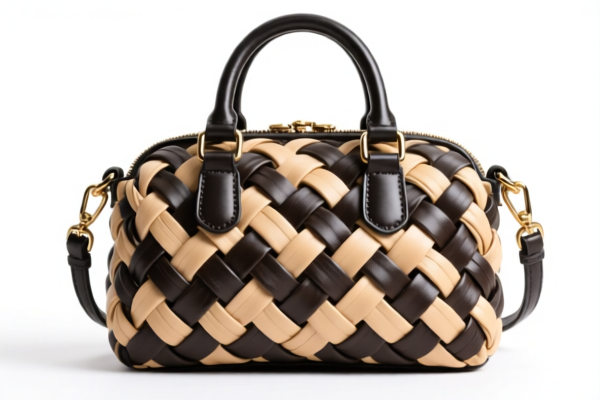
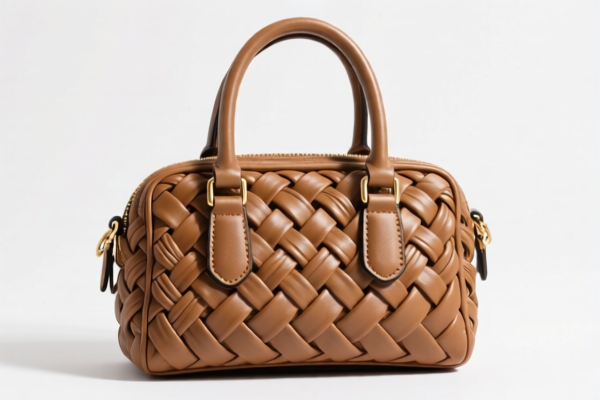
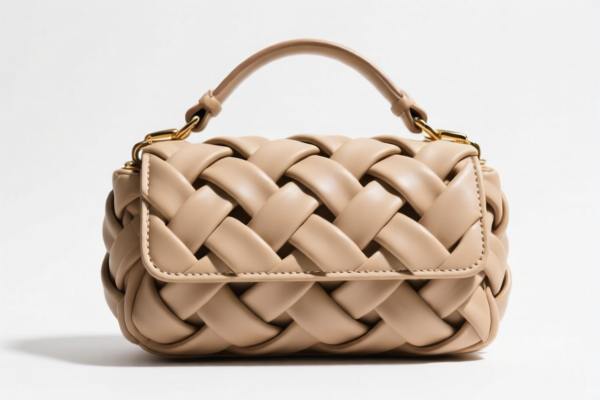
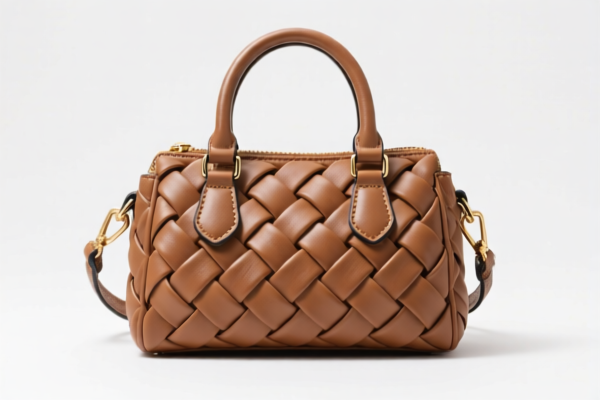
AI Analysis
👜 Woven Handbag (Small Capacity)
🌐 HS Code Reference & Customs Clearance Guide | 2026 Latest Tariff Analysis | Professional Entry Strategies
📌 I. Product Definition & Classification: Do You Really Understand "Woven Handbags"?
A Woven Handbag (Small Capacity) is a fashion accessory designed for carrying small personal items (keys, phone, cosmetics). In international trade, its classification hinges on two critical factors:
1. Material Composition: Is the "weave" natural fiber, synthetic textile, or plastic-like polymer?
2. Construction: Is it a finished bag with lining/hardware, or a raw woven piece?
⚠️ Key Distinction Points:
- If the exterior is made of textile materials (cotton, polyester, jute weave) → It generally falls under Chapter 42 (Articles of leather; saddlery and harness).
- If the exterior is made of plastic materials (synthetic fiber weave that behaves like plastic) → It may fall under Chapter 39 (Plastics and articles thereof).
- If the material is natural vegetable materials (straw, rattan, reed) → It falls under Chapter 46 (Man-made cellulosic fiber paper; weaving materials).
📦 II. HS Code Classification Details (2026 Latest Tariff Authority Comparison)
Based on the provided data, here are the five most relevant HS Codes for Woven Handbags, categorized by material inference:
| HS Code | Product Description | Material Inference | Application Scenario | Tax Profile |
|---|---|---|---|---|
4602.19.29.20 |
Woven Handbags | Natural/Cellulosic Weaving Materials (Straw, Rattan, Reed, etc.) |
Straw bags, rattan totes, eco-friendly woven fashion | 40.3% |
4202.22.35.00 |
Woven Handbags | Textile Weave (Inferred woven textile material) |
Standard woven fabric handbags, cotton/poly blend | 43.4% |
4202.22.40.20 |
Woven Handbags | Textile Weave (No material conflict, textile assumption) |
General textile handbags, fashion accessories | 42.4% |
4202.22.89.30 |
Woven Handbags | Woven Textile Material (Outer layer is textile) |
Other woven handbags not specified in above codes | 52.6% |
3926.90.99.89 |
Woven Handbags | Plastic/Polymer (Synthetic fiber weave, plastic-like) |
Synthetic woven bags, plastic-straw alternatives | 22.8% |
🔍 Critical Reminder:
- Chapter 46 (4602...) applies only if the weave is from natural vegetable materials (e.g., straw). This is a premium niche with moderate taxes.
- Chapter 42 (4202...) is the most common for fashion handbags. The subheading4202.22specifically refers to handbags with an outer surface of textile materials.
- Chapter 39 (3926...) applies if the "woven" appearance is created by plastic strips or synthetic fibers that are classified as plastics. This often yields the lowest tariff.
- Misclassification Risk: Declaring a plastic-woven bag as4202(textile) will result in a massive tax overpayment (40%+ vs 22%). Conversely, declaring a textile bag as3926may trigger a customs audit for "false declaration of material."
💰 III. 2026 Latest Tariff Rate Breakdown (Including Surcharges & Policy Add-ons)
✅ Applicable Country: United States (US)
✅ Country of Origin: China (CN)
✅ Effective Date: Post-November 10, 2025 (Includes subsequent imports)
🎯 1. 4602.19.29.20 —— Woven Handbags (Natural Vegetable Materials)
| Item | Content |
|---|---|
| Base Tariff | 5.3% |
| Section 301 Surcharge | +25.0% |
| IEEPA Surcharge (122 Clause) | +10.0% |
| Total Effective Rate | 40.3% |
| Tax Calculation | CIF Value × 40.3% |
| De Minimis Exemption | ❌ Not Eligible (denied_de_minimis) |
| Legal Basis Path | USITC:4602.19.29.20 → FOOTNOTE:301 → IEEPA:122 |
📌 Explanation:
- This code benefits from the lowest base tariff (5.3%) among the "woven" options because natural weaving materials are considered less industrial.
- However, Section 301 (25%) and IEEPA (10%) still apply, resulting in a 40.3% total burden.
- Strategy: Ideal if you can source natural straw/rattan from non-China origins (e.g., Vietnam, India) to avoid Section 301.
🎯 2. 4202.22.35.00 & 4202.22.40.20 —— Woven Handbags (Textile Materials)
| Item | Content |
|---|---|
| Base Tariff | 7.4% - 8.4% |
| Section 301 Surcharge | +25.0% |
| IEEPA Surcharge (122 Clause) | +10.0% |
| Total Effective Rate | 42.4% - 43.4% |
| Tax Calculation | CIF Value × ~43% |
| De Minimis Exemption | ❌ Not Eligible (denied_de_minimis) |
| Legal Basis Path | USITC:4202.22.xx.xx → FOOTNOTE:301 → IEEPA:122 |
📌 Note:
- These codes are standard for textile handbags. The slight difference in base tariff (7.4% vs 8.4%) depends on the specific textile composition details.
- High Tax Burden: With a ~43% total rate, cost control is critical.
- Material Proof: Customs will require proof that the outer layer is textile (e.g., fabric swatch, weaving diagram).
🎯 3. 4202.22.89.30 —— Other Woven Handbags (Textile)
| Item | Content |
|---|---|
| Base Tariff | 17.6% |
| Section 301 Surcharge | +25.0% |
| IEEPA Surcharge (122 Clause) | +10.0% |
| Total Effective Rate | 52.6% |
| Tax Calculation | CIF Value × 52.6% |
| De Minimis Exemption | ❌ Not Eligible (denied_de_minimis) |
| Legal Basis Path | USITC:4202.22.89.30 → FOOTNOTE:301 → IEEPA:122 |
📌 Warning:
- This is the highest tax bracket for woven handbags. It applies to textile handbags that do not fit into the specific subcategories of4202.22.35or4202.22.40.
- Avoidance Strategy: Try to classify your product under4202.22.35or4202.22.40by providing detailed material specifications that fit those narrower definitions.
🎯 4. 3926.90.99.89 —— Woven Handbags (Plastic/Polymer)
| Item | Content |
|---|---|
| Base Tariff | 5.3% |
| Section 301 Surcharge | +7.5% (Note: Lower than standard 301 for some plastic goods) |
| IEEPA Surcharge (122 Clause) | +10.0% |
| Total Effective Rate | 22.8% |
| Tax Calculation | CIF Value × 22.8% |
| De Minimis Exemption | ❌ Not Eligible (denied_de_minimis) |
| Legal Basis Path | USITC:3926.90.99.89 → FOOTNOTE:301 → IEEPA:122 |
📌 Opportunity:
- Lowest Tax Rate: At 22.8%, this is significantly cheaper than textile/natural options.
- Condition: This ONLY applies if the woven material is legally classified as plastic (e.g., PVC strips, polypropylene weave, synthetic "straw").
- Risk: If the product is actually cotton or polyester, declaring it as3926is illegal and risks severe penalties. Use this only if the material is genuinely plastic-based.
🛠️ IV. Customs Clearance Practical Advice (Battle-Tested Pitfall Guide)
✅ 1. Document Checklist (Non-Negotiable)
| Document | Required | Explanation |
|---|---|---|
| ✅ Product Photo | ✔️ | Clear shot of the weave pattern, showing if it’s straw, fabric, or plastic strip. |
| ✅ Material Swatch | ✔️ | A small piece of the outer material for customs lab testing if requested. |
| ✅ Composition Certificate | ✔️ | States: "100% Cotton Weave," "100% Straw," or "100% Polypropylene." |
| ✅ Commercial Invoice | ✔️ | Must specify: "Woven Handbag, Material: [XXX], Capacity: Small." |
| ✅ Packing List | ✔️ | Weight and dimensions are crucial for duty calculation. |
| ✅ Lining/Hardware Details | ✔️ | Confirm if lining is textile, leather, or plastic (affects Chapter 42 vs 39). |
✅ 2. Declaration Tips (Key Mantra)
🔥 "Material Defines Code, Plastic Saves Money, Textile is Standard, Straw is Niche!"
| Scenario | Correct Declaration | Wrong Action |
|---|---|---|
| Cotton/Polyester Woven | 4202.22.35.00 or 4202.22.40.20 |
Declare as 3926 → Audit for false material |
| Natural Straw/Rattan | 4602.19.29.20 |
Declare as 4202 → Misclassification |
| Plastic Strip Woven | 3926.90.99.89 |
Declare as 4202 → Overpay ~20% tax |
| Mixed Materials | Analyze outer layer | Guessing → Random high tax |
✅ 3. Special Situations
| Situation | Handling Advice |
|---|---|
| OEM/Custom Design | Provide design sketches showing the weave type to justify 4202 vs 3926. |
| "Eco-Friendly" Marketing | If using PLA (Polylactic Acid), it is still plastic. Declare as 3926 (22.8%) unless it’s certified as natural vegetable fiber (then 4602). |
| Small Capacity | Emphasize "Handbag" not "Pouch" or "Wallet" to avoid Chapter 43 (Fur) or 49 (Travel Goods) ambiguities. |
| Origin Diversification | If using Vietnamese Straw, you may avoid Section 301 (25%) if eligible, reducing 4602 tax significantly. |
🌍 V. Global Market Comparison (2026 Latest)
| Country/Region | Recommended HS Code | Tariff (China Origin) | Certification Requirements | Notes |
|---|---|---|---|---|
| 🇺🇸 USA | 3926.90.99.89 (if plastic) |
22.8% | IEEPA 122 Compliance | Best tax rate if material is plastic. |
| 🇺🇸 USA | 4202.22.40.20 (if textile) |
42.4% | IEEPA 122 Compliance | Standard for fashion bags. |
| 🇨🇳 China | 4202.22.40.20 |
~10-15% | N/A | Lower base rates, no Section 301. |
| 🇪🇺 EU | 4202.22.40.20 |
10-12% | CE (if applicable) | No anti-dumping on handbags generally. |
| 🇬🇧 UK | 4202.22.40.20 |
12% | UKCA (if applicable) | Post-Brexit tariffs apply. |
📌 Conclusion:
- USA is the most tax-sensitive market due to Section 301 and IEEPA 122.
- Plastic-based woven bags (3926) offer the biggest savings in the US market (22.8% vs 43%+).
- Textile bags (4202) are the safest default for fashion brands but carry higher tax.
📌 VI. Common Errors & Pitfall Guide (Lessons Learned)
❌ Error 1: Declaring a Cotton Woven bag as 3926 (Plastic)
👉 Consequence: Customs Penalty + Back Tax + Rejection. Labs will detect the natural fiber.
❌ Error 2: Declaring a Plastic Woven bag as 4202 (Textile)
👉 Consequence: Overpayment of ~20% tax. No penalty, but lost profit.
❌ Error 3: Vague Description: "Woven Bag"
👉 Consequence: Customs holds shipment to determine material. Delay costs money.
✅ Correct: "Woven Handbag, Outer Material: 100% Polypropylene Strips, Lining: Polyester"
❌ Error 4: Ignoring the "Small Capacity" Aspect
👉 Consequence: If it’s too large, it might be classified as "Travel Goods" (4202.90) with different rates. Ensure dimensions align with "Handbag."
✅ Correct Declaration Example:
"Woven Handbag, Small Size, 100% Synthetic Plastic Strips, Unlined, Brand: XYZ, HS: 3926.90.99.89"
🎯 VII. Conclusion: Professional Classification, Cost Savings!
🎯 Remember the Mantra:
🔹 "Plastic Woven? Go 3926 (22.8%). Textile Woven? Go 4202 (43%). Straw Woven? Go 4602 (40.3%)."
🔹 "Material Proof is King. No Paper, No Clearance."
🔹 "IEEPA 122 applies to ALL Chinese Origin Handbags. Budget for 10% on top!"
📌 Pro Tip:
If your product is 100% Plastic (even if it looks like straw), ALWAYS declare under 3926.90.99.89 for the US market. The 20%+ tax savings justifies the slight risk of providing material test reports.
For Textile bags, try to fit 4202.22.40.20 (42.4%) rather than 4202.22.89.30 (52.6%) by providing specific textile composition details.
📣 Action Required:
📞 Confirm Material: Is your "woven" bag Cotton, Straw, or Plastic?
📄 Get Test Report: Obtain a material composition certificate from your supplier.
🚀 Optimize HS Code: Choose the lowest legal rate based on material.
✨ Professional Customs Clearance Starts with Precise Classification!
💼 Every Percentage Point Saved is Pure Profit!
Customer Reviews
About HS Code Classification
The Harmonized System (HS) is an internationally standardized nomenclature developed by the World Customs Organization (WCO) to classify traded products. Over 200 countries use the HS system as the basis for customs tariffs, trade statistics, and import/export regulations.
Each HS code follows a hierarchical structure:
- Chapter (2 digits) — Broad category of goods (e.g., Chapter 84: Machinery and Mechanical Appliances)
- Heading (4 digits) — More specific grouping within the chapter
- Subheading (6 digits) — Internationally standardized breakdown, used by all WCO member countries
- National subdivisions (8-10 digits) — Country-specific extensions for further classification, such as US HTSUS 10-digit codes
Correct HS code classification is essential for smooth customs clearance, accurate duty payment, and compliance with trade regulations. Misclassification can lead to customs delays, overpayment of duties, or penalties.
When importing from CN to US, the applicable tariff rates may include:
- Most-Favored-Nation (MFN) rate — The standard duty rate applied to WTO members
- General rate — Applied to countries without trade agreements
- Trade remedy duties — Additional tariffs such as Section 301 (anti-dumping), Section 232 (national security), or countervailing duties
The information provided on this page is for reference purposes only. For official classification, please consult with your local customs authority or a licensed customs broker.